Introduction
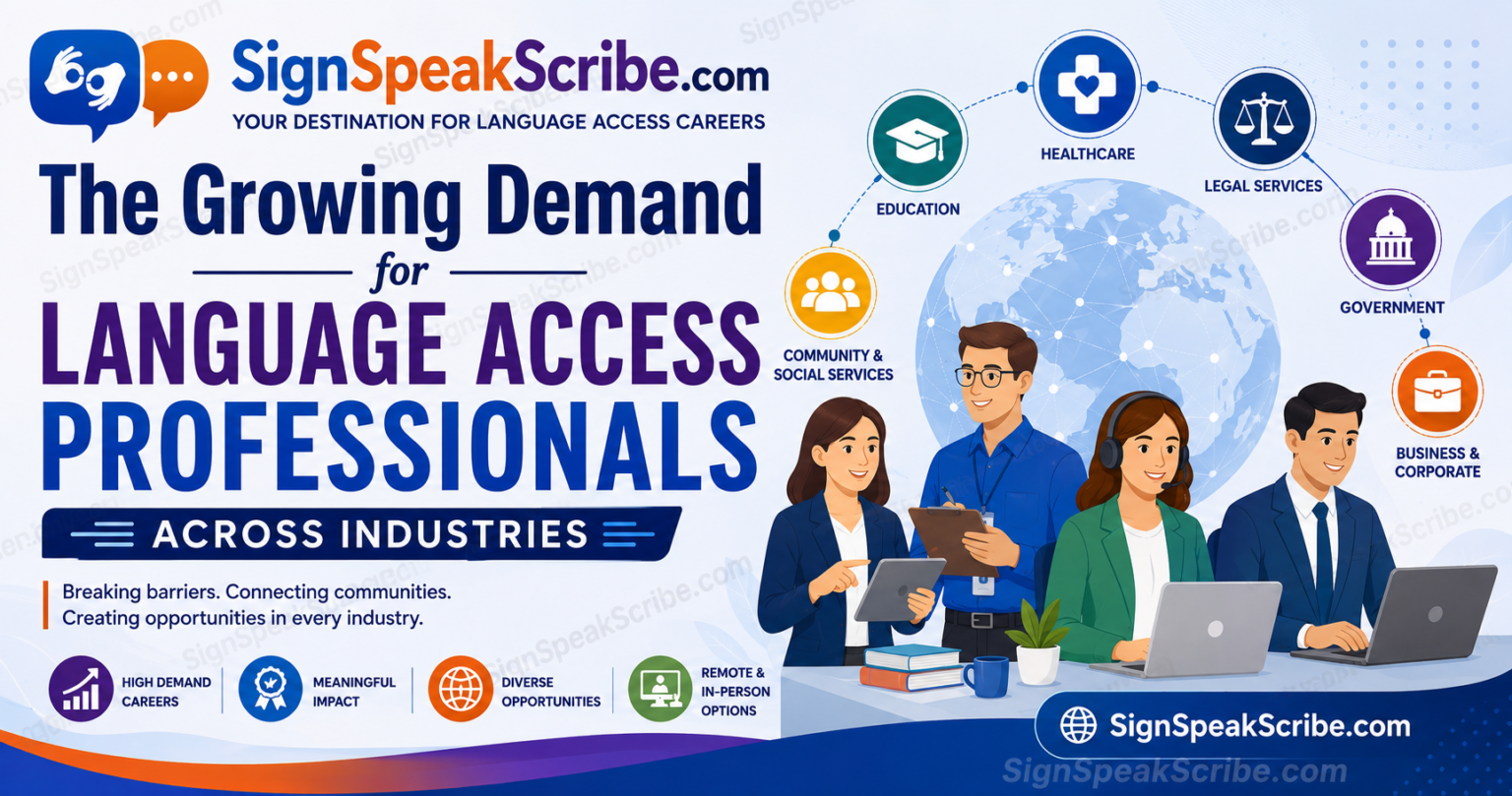
The demand for language access professionals continues to rise as organizations recognize the importance of effective communication with diverse communities. From hospitals and courtrooms to schools, corporations, and government agencies, employers increasingly rely on qualified professionals to eliminate communication barriers and ensure equal access to services.
As populations become more linguistically diverse and accessibility regulations continue to evolve, careers in the language access industry have become more essential than ever. Whether you’re considering a career change or are already working in the field, understanding where opportunities are growing can help you position yourself for long-term success.
Why Language Access Matters More Than Ever
Language access is about ensuring everyone has an equal opportunity to communicate, regardless of the language they speak or whether they are Deaf, hard of hearing, blind, or have other communication needs.
Organizations invest in language access because it helps them:
- Improve customer and client experiences
- Meet legal and regulatory requirements
- Reduce communication errors
- Increase accessibility
- Build trust within diverse communities
- Expand services to multilingual populations
As awareness grows, employers are seeking professionals with specialized communication skills more frequently than ever before.
Healthcare Continues to Lead Hiring
Healthcare remains one of the largest employers of language access professionals.
Hospitals, clinics, behavioral health centers, rehabilitation facilities, and telehealth providers require qualified professionals to ensure patients fully understand diagnoses, treatment plans, medications, and informed consent.
Growing opportunities include:
- Sign language interpreters
- Spoken language interpreters
- Medical translators
- Medical transcriptionists
- Captioning specialists
- Patient communication coordinators
As healthcare systems continue expanding telemedicine and serving increasingly diverse communities, demand for qualified professionals is expected to remain strong.
Education Requires Greater Accessibility
Schools, colleges, and universities are expanding accessibility services for students, parents, and staff.
Educational institutions regularly hire professionals to support:
- Individualized Education Program (IEP) meetings
- Classroom interpreting
- Parent-teacher conferences
- College lectures
- Graduation ceremonies
- Campus events
Many institutions now offer both in-person and remote services, creating additional opportunities for professionals interested in flexible work arrangements.
Legal Services Depend on Accurate Communication
Courts, law firms, public defenders, immigration attorneys, and law enforcement agencies rely heavily on accurate communication.
Legal environments require professionals who understand confidentiality, ethics, and specialized terminology.
Common roles include:
- Court interpreters
- Legal translators
- CART captioners
- Communication Access Realtime Translation (CART) providers
- Document translators
Accuracy is essential because communication mistakes can directly affect legal outcomes.
Government Agencies Continue Expanding Language Access
Federal, state, county, and local governments increasingly prioritize accessibility.
Language access professionals support:
- Public assistance programs
- Elections
- Public meetings
- Emergency management
- Social services
- Workforce development
- Public health initiatives
Government agencies also contract with independent professionals and language service providers, creating both full-time and freelance opportunities.
Businesses Are Investing in Inclusive Communication
Private companies have recognized that language access improves customer satisfaction and supports business growth.
Industries hiring language access professionals include:
- Banking
- Insurance
- Technology
- Human Resources
- Retail
- Hospitality
- Manufacturing
Businesses need professionals for:
- Employee training
- Customer support
- Product localization
- Website translation
- Corporate events
- Marketing materials
- Accessibility compliance
Companies that serve global or multilingual audiences increasingly view language access as a competitive advantage rather than simply a compliance requirement.
Remote Work Has Expanded Career Opportunities
Technology has transformed the language access industry.
Many professionals now provide services remotely using secure video platforms and cloud-based collaboration tools.
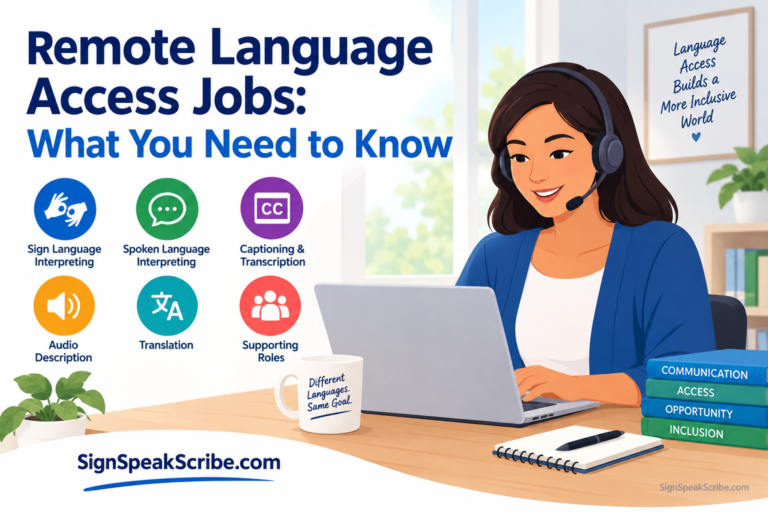
Remote opportunities include:
- Video Remote Interpreting (VRI)
- Remote spoken language interpreting
- Live captioning
- Remote CART
- Translation projects
- Transcription services
- Audio description
Remote work allows professionals to serve clients across the country without relocating, expanding employment options significantly.
Technology Is Creating New Career Paths
Artificial intelligence and automation continue changing how communication services are delivered.
Rather than replacing professionals, technology is creating new specialized roles that combine human expertise with digital tools.
Emerging opportunities include:
- AI quality reviewers
- Accessibility consultants
- Localization specialists
- Multimedia caption editors
- Accessibility compliance coordinators
- Language technology specialists
Human oversight remains essential for accuracy, cultural context, and accessibility.
Skills Employers Are Looking For
Today’s employers value professionals who possess both technical expertise and strong interpersonal skills.
Desired qualifications often include:
- Excellent communication skills
- Cultural competency
- Professional ethics
- Industry-specific knowledge
- Strong writing abilities
- Technology proficiency
- Time management
- Adaptability
- Attention to detail
Many positions also require professional certifications depending on the specialty.
Career Outlook Looks Promising
The language access industry continues evolving alongside advances in technology, accessibility standards, and globalization.
Professionals who continue developing specialized skills can find opportunities across numerous sectors rather than being limited to one industry.
Whether working as an employee, contractor, freelancer, or business owner, language access professionals play an essential role in helping organizations communicate effectively with every community they serve.
Key Takeaways
- Demand for language access professionals continues growing across healthcare, education, legal, government, and private industries.
- Remote work has significantly expanded career opportunities.
- Technology is creating new specialized positions alongside traditional roles.
- Employers increasingly prioritize accessibility, inclusion, and multilingual communication.
- Professionals with specialized certifications and technical skills remain highly competitive.
Frequently Asked Questions
What are language access professionals?
Language access professionals help individuals communicate across languages and communication barriers. They include sign language interpreters, spoken language interpreters, translators, captioners, transcriptionists, audio description specialists, and other accessibility professionals.
Which industries hire language access professionals?
Healthcare, education, legal services, government, technology, finance, hospitality, manufacturing, nonprofit organizations, and corporate businesses all employ language access professionals.
Is remote work available in language access careers?
Yes. Many professionals now work remotely through video interpreting, live captioning, remote translation, transcription, and accessibility consulting.
Are language access careers expected to grow?
Yes. As organizations continue improving accessibility and serving more diverse communities, demand for qualified professionals is expected to remain strong.
Conclusion
The need for language access professionals has never been greater. Organizations across nearly every industry recognize that effective communication is essential for accessibility, inclusion, customer service, and legal compliance.
Whether your expertise is in sign language, spoken language, translation, captioning, transcription, or audio description, there are expanding opportunities to build a rewarding career while making communication accessible for everyone.
Call to Action
Looking for your next opportunity in the language access industry?
Explore the latest jobs, career resources, and employer opportunities at SignSpeakScribe.com—your destination for careers in sign language, spoken language, translation, captioning, transcription, audio description, and other language access professions.