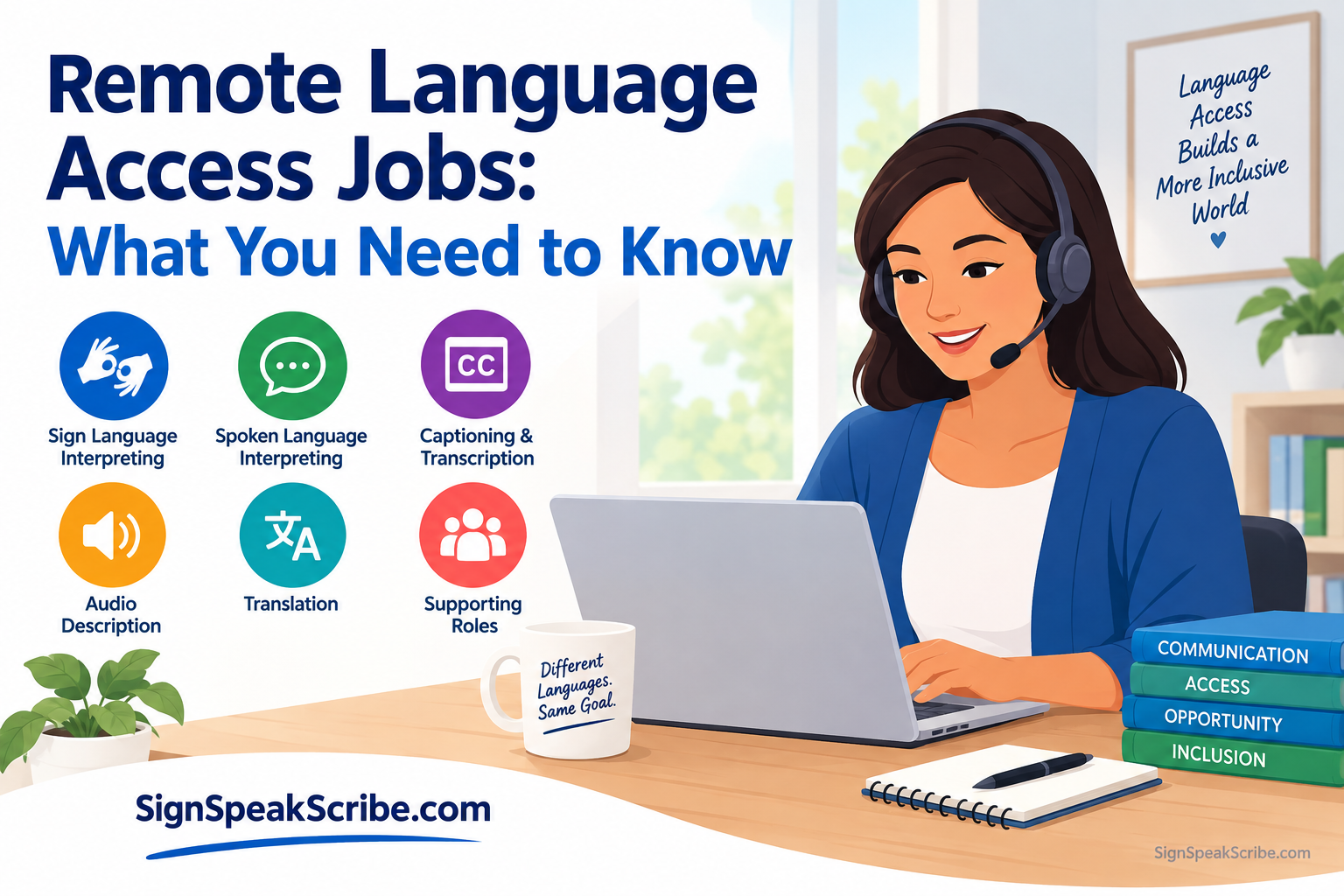
Remote language access jobs have become an important part of the language access industry, giving professionals new ways to provide interpreting, captioning, translation, audio description, and other services without always being physically present at a job site.
For language access professionals, remote work can provide greater flexibility and access to opportunities beyond their local communities. For employers and agencies, remote professionals can help expand service availability across locations and time zones.
However, working remotely also comes with its own technology requirements, professional expectations, and challenges. If you are considering a remote language access career, here are some important things to know.
1. What Are Remote Language Access Jobs?
Remote language access jobs allow professionals to provide communication or language services from a location other than where the client, patient, student, customer, or organization is physically located.
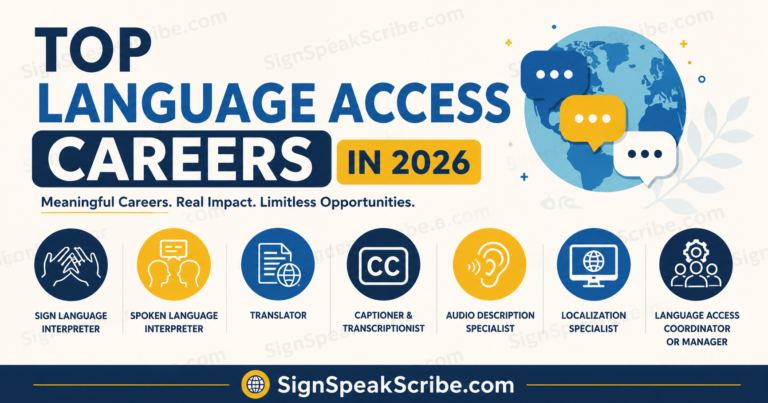
Depending on the profession, remote work may include:
- Sign language interpreting
- Spoken language interpreting
- Captioning and transcription
- Translation
- Audio description
- Supporting roles within the language access industry
Technology makes many of these services possible through video conferencing platforms, telephone interpreting systems, specialized captioning software, cloud-based tools, and other communication technologies.
Remote work can take several forms. Some professionals work entirely from home, while others combine remote assignments with on-site work.
For example, an interpreter may provide services through a video platform for a healthcare appointment in another city. A translator may work entirely online and communicate with clients through email and project-management systems. A captioner may provide real-time captioning for a virtual meeting or event.
2. Remote Interpreting Jobs Offer Greater Geographic Flexibility
One of the biggest advantages of remote language access work is geographic flexibility.
Traditional on-site positions often require professionals to travel to a hospital, courthouse, school, business, conference, or other location. Remote assignments can reduce or eliminate some of that travel.
This can open opportunities for professionals who live outside major metropolitan areas or who want to work with organizations located elsewhere.
Remote interpreting jobs may include both video and telephone-based services. Depending on the assignment and profession, interpreters may work with clients across different cities, states, or regions.
However, geographic flexibility does not necessarily mean that every remote position can be performed from anywhere. Employers and agencies may have specific requirements involving:
- State licensing or certification
- Professional credentials
- Time zones
- Availability
- Client requirements
- Language proficiency
- Confidentiality and security
- Equipment and internet connectivity
Always review the requirements of a position before applying.
3. Technology Is a Major Part of Remote Language Access Work
Successful remote language access professionals need more than professional language skills. They also need to be comfortable using technology.
Depending on the position, you may need:
- A reliable computer
- High-speed internet
- A quality microphone or headset
- A webcam
- A quiet and private workspace
- Video conferencing software
- Captioning or transcription platforms
- Secure communication tools
- Backup equipment or internet access
Technology problems can interrupt communication at exactly the moment when reliable access is most important.
For that reason, remote professionals should understand how their equipment works and have a plan for dealing with technical problems.
A professional home workspace can also make a significant difference. A quiet environment, appropriate lighting, reliable equipment, and limited distractions can help create a better experience for both the professional and the people receiving language access services.
4. Remote Work Requires Strong Professional Skills
Remote language access professionals still need the same core professional skills expected in other language access settings.
Depending on the profession, those skills can include language proficiency, interpreting or translation expertise, cultural awareness, accuracy, professionalism, confidentiality, and knowledge of professional standards.
Remote work can also require additional skills.
Communication
Remote professionals need to communicate clearly with clients, colleagues, agencies, and employers, often through digital platforms.
Time Management
A remote schedule can involve multiple assignments, different clients, and changing time zones. Keeping track of appointments and deadlines is essential.
Technology Skills
Professionals should be comfortable learning new platforms and troubleshooting basic technology problems.
Self-Management
Working from home can provide flexibility, but it also requires discipline. Without a traditional workplace around you, you are responsible for maintaining your own workspace, schedule, equipment, and professional routine.
5. Remote Captioning and Translation Jobs Continue to Expand Opportunities
Remote work isn’t limited to interpreting.
Remote captioning jobs can involve live captioning, transcription, accessibility services, meetings, events, educational programs, media, and other applications.
Remote translation jobs can also be performed from virtually anywhere, depending on the employer and project requirements. Translators may work on documents, websites, educational materials, technical content, legal materials, marketing content, and other projects.
Audio description is another area where technology can enable remote work. Professionals may contribute to accessibility for television, film, theater, digital media, and other content.
This variety is one reason it can be useful to think about language access as a broad professional field rather than focusing on only one type of service.
Key Takeaways
If you’re considering remote language access jobs, remember these key points:
- Remote work can expand access to opportunities beyond your immediate geographic area.
- Remote positions exist across interpreting, captioning, transcription, translation, audio description, and supporting roles.
- Technology is an essential part of many remote language access careers.
- A reliable internet connection and professional workspace are important.
- Certification, licensing, experience, and other qualifications may still be required.
- Remote work requires strong communication, organization, and time-management skills.
- Not every remote position allows professionals to work from any location.
- Remote work can complement traditional on-site language access opportunities.
Frequently Asked Questions
Are remote language access jobs available for beginners?
Some positions may be appropriate for professionals who are early in their careers, while others require certification, experience, specialized training, or other qualifications. Always check the requirements listed by the employer.
Can interpreters work from home?
Yes. Depending on the profession and employer, interpreters may provide services remotely through video or telephone platforms. Specific credentialing, licensing, technology, and availability requirements can apply.
What equipment do remote language access professionals need?
Requirements vary by position, but many remote professionals need a computer, reliable high-speed internet, quality audio equipment, a webcam when video is required, and a private workspace.
Are remote language access jobs flexible?
Some are, but flexibility varies considerably. Certain positions may involve scheduled appointments or fixed shifts, while others may offer more control over when work is completed.
Where can I find remote language access jobs?
Professional job boards, employer websites, interpreting agencies, language service companies, professional organizations, and specialized industry platforms can all be useful sources for finding opportunities.
Conclusion
Remote language access jobs are creating additional opportunities for professionals across the industry. From remote interpreting and captioning to translation, transcription, audio description, and supporting roles, technology is making it possible to deliver many services without requiring professionals and clients to be in the same physical location.
For professionals considering this career path, success requires more than language expertise. Technology skills, professionalism, organization, communication, and a reliable remote workspace are increasingly important.
As the language access industry continues to evolve, remote work can be one more way professionals can build their careers and connect with organizations that need their expertise.
Find Your Next Language Access Opportunity
Whether you’re looking for remote interpreting jobs, captioning opportunities, translation work, audio description positions, or other language access careers, SignSpeakScribe.com is dedicated to connecting language access professionals with employers and opportunities.
Explore current opportunities and find your next language access job at SignSpeakScribe.com.