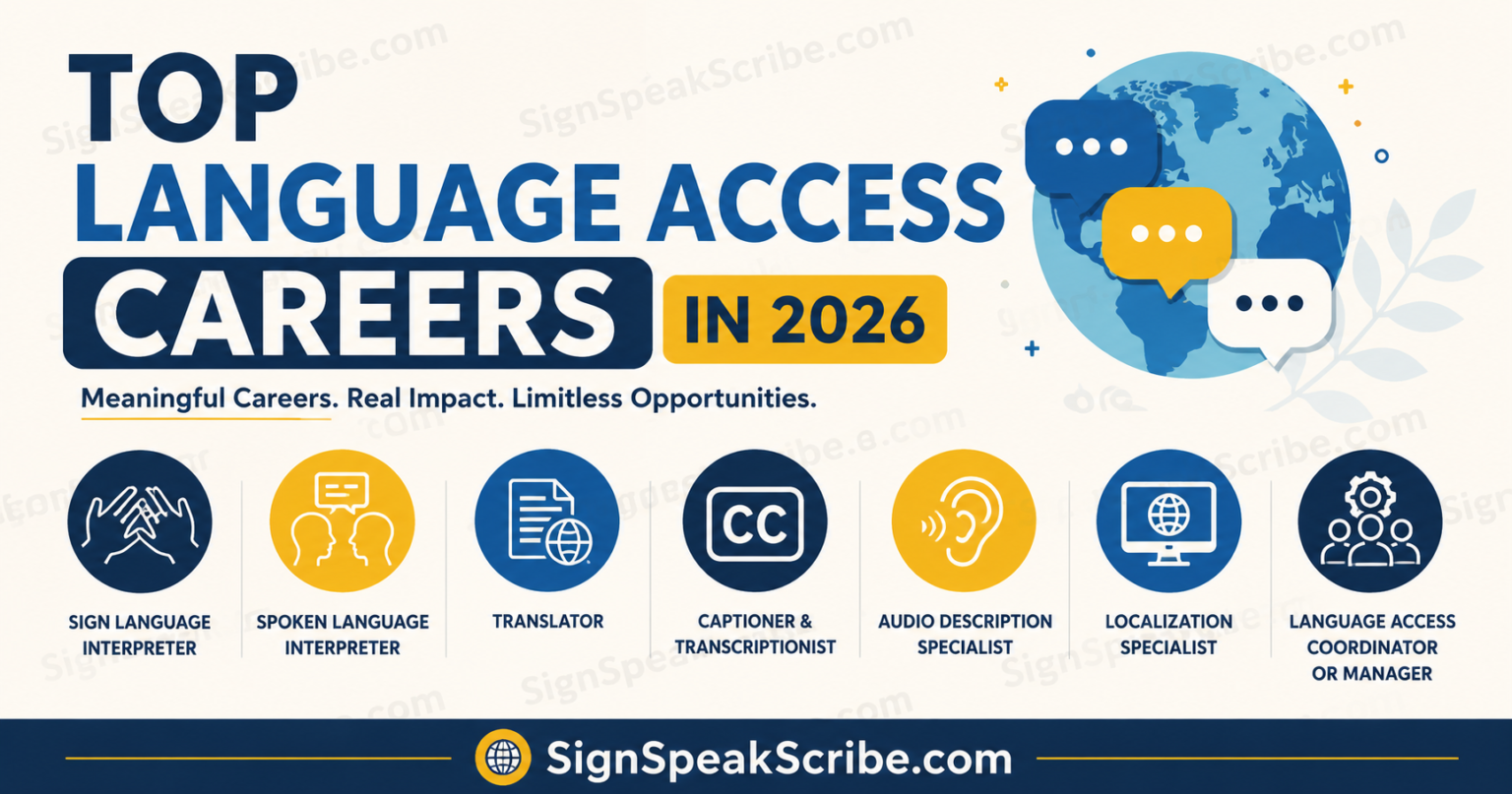
Top Language Access Careers in 2026
Introduction
Top Language Access Careers in 2026 continue to evolve as technology, accessibility requirements, and growing multilingual populations increase the demand for communication professionals. While artificial intelligence is changing workflows, organizations still depend heavily on skilled professionals who provide accuracy, cultural understanding, and human connection. Recent industry trends show continued growth in interpreting, translation, and accessibility services.
Whether you are a student, career changer, or experienced professional looking for your next opportunity, these are some of the most promising language access careers in 2026.
1. Sign Language Interpreter
Sign language interpreters remain among the most essential professionals in the language access field.
Demand continues across:
- Healthcare
- Education
- Government agencies
- Courts
- Video Remote Interpreting (VRI)
- Corporate accessibility services
Although AI tools are improving, communication involving Deaf and hard-of-hearing individuals still requires human judgment, cultural awareness, and adaptability. Human oversight remains critical in language access environments.
Why this career stands out
- Strong demand nationwide
- Flexible work arrangements
- Freelance and staff opportunities
- Meaningful impact on accessibility
Sign Language Interpreter Career Guide
Interested in becoming a sign language interpreter? Explore our comprehensive Sign Language Interpreter Career Guide to learn about education requirements, certifications, career paths, and job opportunities in the field.
2. Spoken Language Interpreter
Spoken language interpreters are increasingly needed in healthcare, legal settings, schools, and public services.
Common specialties include:
- Spanish interpreters
- ASL-English relay interpreters
- Medical interpreters
- Court interpreters
- Conference interpreters
Organizations continue expanding access through:
- On-site interpreting
- Over-the-phone interpreting (OPI)
- Video Remote Interpreting (VRI)
The growth of multilingual populations and telehealth services is helping drive demand.
Why this career stands out
- High demand for specialized interpreters
- Opportunities for remote work
- Diverse industries to serve
- Growing need in healthcare and public services
Spoken Language Interpreter Career Guide
Want to pursue a career in spoken language interpreting? Read our Spoken Language Interpreter Career Guide for information about specialties, certifications, work settings, and professional growth opportunities.
3. Translator
Translation remains one of the largest sectors within the language services industry. Despite advances in machine translation, professionals are increasingly serving as editors, reviewers, and subject-matter specialists rather than simply translating text word for word.
Popular specialties include:
- Medical translation
- Legal translation
- Technical translation
- Financial translation
- Website localization
Why this career stands out
- Remote and freelance opportunities
- Ability to specialize
- International clients
- Growing demand for localization services
Translator Career Guide
Considering a career in translation? Our Translator Career Guide covers essential skills, specialization options, certification pathways, and employment opportunities for aspiring translators.
4. Captioner and Transcriptionist
Accessibility regulations and increased video consumption continue to create opportunities for captioners and transcriptionists.
These professionals support:
- Television
- Online video platforms
- Educational institutions
- Corporate training
- Conferences and events
Services include:
- Real-time CART captioning
- Closed captioning
- Transcription
- Meeting summaries
As organizations strive to improve accessibility, captioning professionals remain indispensable.
Why this career stands out
- Growing accessibility awareness
- Remote work possibilities
- High demand for live captioning skills
- Opportunities in education and media
Captioner and Transcriptionist Career Guide
Interested in captioning or transcription? Visit our Captioner and Transcriptionist Career Guide to discover the skills, tools, and career opportunities available in this growing accessibility field.
5. Audio Description Specialist
Audio description is one of the fastest-growing accessibility services.
Audio description specialists create narrated descriptions for:
- Movies
- Television programs
- Streaming services
- Museums
- Theaters
- Educational content
This profession helps individuals who are blind or visually impaired experience visual content more fully.
Why this career stands out
- Increasing accessibility requirements
- Expanding entertainment market
- Creative and specialized work
- Opportunities with media companies
Audio Description Specialist Career Guide
Learn more about this emerging profession in our Audio Description Specialist Career Guide. You’ll find information about required skills, training, and career opportunities serving individuals who are blind or visually impaired.
6. Localization Specialist
Global companies increasingly need professionals who understand language and culture.
Localization specialists help adapt:
- Websites
- Software
- Mobile applications
- Marketing materials
- E-commerce platforms
In 2026, AI-powered workflows are changing the industry, but human expertise remains necessary for quality assurance and cultural adaptation.
Why this career stands out
- Technology-focused role
- International career opportunities
- Strong demand from businesses
- Remote work options
7. Language Access Coordinator or Manager
Behind every successful language access program are professionals who coordinate services and ensure compliance.
Language access managers oversee:
- Interpreter scheduling
- Vendor relationships
- Accessibility policies
- Quality assurance
- Technology implementation
Research shows that language access leaders are embracing AI carefully while emphasizing the continuing importance of human oversight.
Why this career stands out
- Leadership opportunities
- Growing demand in healthcare and government
- Combines operations and accessibility
- Excellent advancement potential
Key Takeaways
The top language access careers in 2026 include:
- Sign Language Interpreter
- Spoken Language Interpreter
- Translator
- Captioner and Transcriptionist
- Audio Description Specialist
- Localization Specialist
- Language Access Coordinator or Manager
Although artificial intelligence is transforming the industry, professionals who combine communication skills, subject matter expertise, and cultural competence remain highly valuable. Industry experts increasingly view AI as a tool that augments rather than replaces human professionals.
Frequently Asked Questions
Are language access careers growing in 2026?
Yes. Demand continues across healthcare, education, government, legal services, media, and corporate sectors.
Will AI replace interpreters and translators?
AI is changing workflows, but human expertise, ethics, cultural understanding, and quality control remain essential. Most professionals are expected to work alongside AI rather than be replaced by it.
Which language access career offers remote work opportunities?
Many careers offer remote opportunities, including:
- Translation
- Captioning
- Transcription
- Localization
- Video Remote Interpreting
- Language access coordination
Conclusion
Language access careers continue to provide meaningful and rewarding opportunities in 2026. As organizations seek to improve accessibility and serve increasingly diverse populations, professionals who bridge communication gaps remain indispensable.
Whether you are interested in interpreting, translation, captioning, transcription, audio description, or leadership roles, the language access field offers numerous pathways for long-term career growth.
Call to Action
Looking for opportunities in the language access industry?
Explore jobs, career guides, and resources at SignSpeakScribe.com, dedicated exclusively to language access careers across the United States and Canada.