Introduction
The sign language interpreter shortage is becoming an increasingly important concern across the interpreting profession. As experienced interpreters approach retirement, leave the field, or transition into other careers, employers and interpreting agencies face a growing challenge: finding qualified interpreters to fill open positions and meet the demand for interpreting services.
From hospitals and schools to government agencies, businesses, courts, and community organizations, sign language interpreters play an essential role in providing communication access for Deaf and hard-of-hearing individuals.
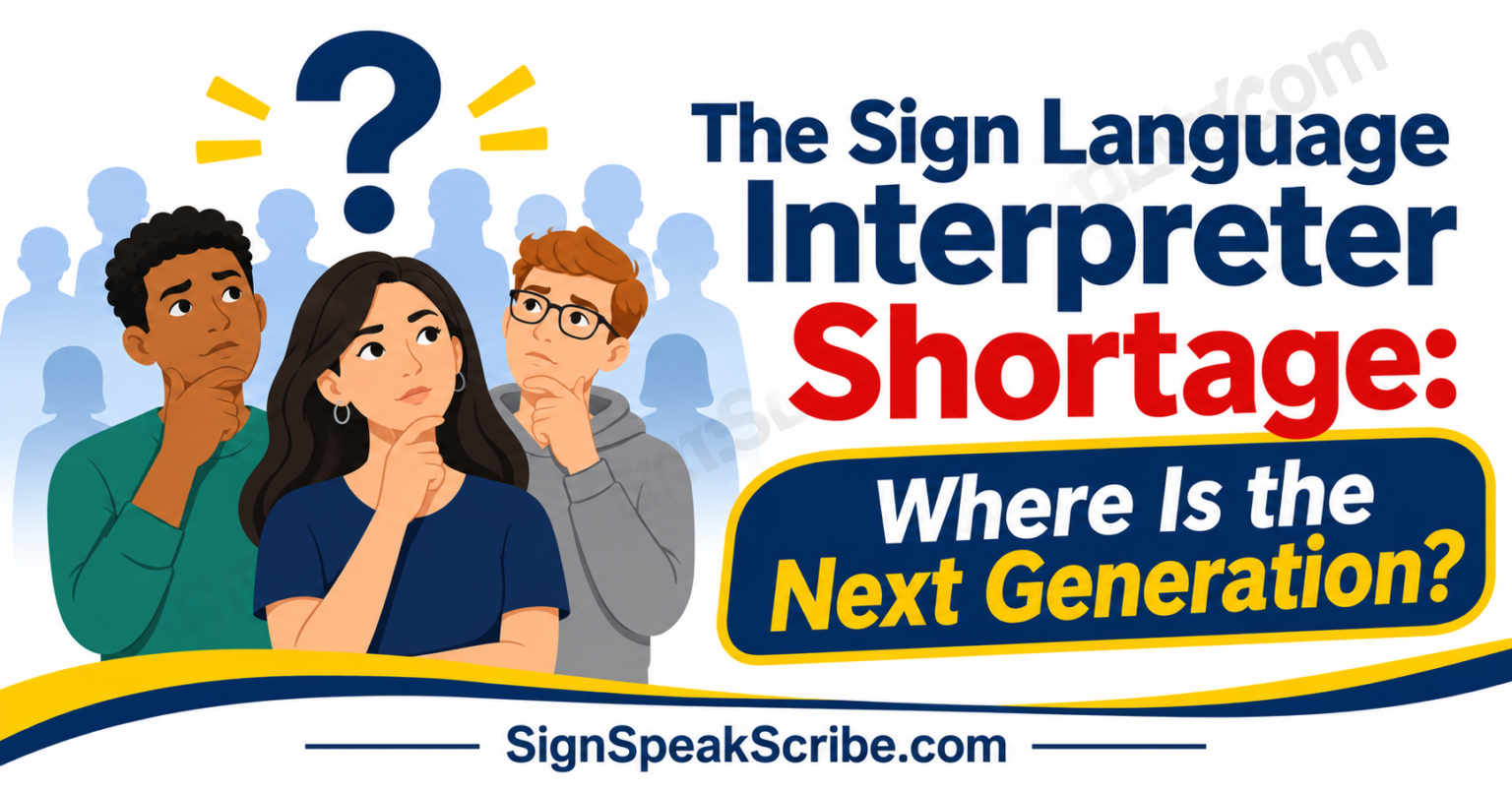
But an important question deserves attention: Where is the next generation of sign language interpreters?
The profession needs more than experienced interpreters to continue doing the work. It needs new students, emerging professionals, interpreter training programs, and employers willing to invest in developing the next generation.
For ASL students and anyone considering a career in interpreting, this may be an opportunity to enter a profession where qualified professionals are needed. For employers and interpreting agencies, it is a reminder that recruitment, retention, and workforce development must become priorities.
1. An Aging Workforce and the Challenge of Replacing Experienced Interpreters
Every profession experiences workforce transitions, and sign language interpreting is no exception.
Many experienced interpreters have spent decades building their skills, developing professional relationships, and serving Deaf communities. Their knowledge and experience are valuable to the profession. However, when these professionals retire or leave the field, their positions and accumulated experience cannot always be replaced immediately.
Replacing an experienced interpreter is not as simple as posting a job advertisement and waiting for applications.
Sign language interpreting requires a combination of language proficiency, cultural understanding, professional judgment, ethical decision-making, and the ability to interpret accurately in different environments.
New interpreters need time, education, mentorship, and practical experience to develop these competencies.
For employers, this creates a workforce planning challenge. Positions may remain open longer, existing interpreters may face heavier workloads, and agencies may struggle to fulfill requests for interpreting services.
The challenge is not simply about finding people who know American Sign Language (ASL). It is about developing and recruiting qualified professionals who can meet the expectations and requirements of the positions being offered.
2. Where Are the Next Generation of ASL Interpreters?
One of the biggest questions facing the profession is where the next generation of sign language interpreters will come from.
For individuals who are passionate about American Sign Language (ASL) and interested in becoming interpreters, there is a professional pathway to explore. However, knowing ASL or being interested in Deaf culture alone does not automatically qualify someone to work as a sign language interpreter.
Aspiring interpreters need to pursue professional interpreter education by enrolling in an Interpreter Education Program (IEP).
These programs are designed to help students develop the knowledge and skills necessary to enter the interpreting profession. Students learn interpreting techniques, language development, professional ethics, cultural awareness, and the responsibilities that come with facilitating communication between Deaf and hearing individuals.
Completing an interpreter education program is an important step toward entering the profession. Depending on the position, employer, and jurisdiction, additional qualifications, certification, or professional credentials may also be required.
For students considering this career, now is a good time to start exploring the opportunities and educational pathways available.
Here are some steps for aspiring sign language interpreters:
- Learn about ASL: Develop a strong foundation in American Sign Language and an understanding of Deaf culture.
- Enroll in an Interpreter Education Program: Research colleges and educational institutions that offer recognized sign language interpreter preparation programs.
- Develop interpreting skills: Build your receptive and expressive language skills, interpreting techniques, and professional competencies through education and practice.
- Understand professional requirements: Research certification, credentials, and qualifications that may be required for the type of interpreting work you want to pursue.
- Explore career opportunities: Learn about employment opportunities with hospitals, schools, government agencies, interpreting agencies, and other organizations.
The profession needs new people who are willing to invest in their education and professional development. Experienced interpreters will not be in the workforce forever, and preparing qualified professionals for the future takes time.
To ASL students and anyone considering a career in sign language interpreting: your interest could be the beginning of a meaningful professional journey. The industry needs its next generation, and that journey starts with education.
3. Employers and Agencies Must Rethink Interpreter Recruitment
While attracting new people to the profession is important, employers cannot overlook the immediate need to recruit qualified interpreters.
Hospitals, schools, government organizations, businesses, and interpreting agencies all have a role to play in addressing the workforce challenge.
Posting a job advertisement is only the beginning. Employers should consider whether their recruitment practices are reaching the professionals they actually need.
Here are several ways employers and agencies can strengthen their recruitment efforts:
Write clear and realistic job descriptions.
Include the required qualifications, certifications where applicable, experience expectations, work setting, compensation, benefits, and scheduling requirements. Clear job descriptions help candidates determine whether an opportunity is right for them.
Make opportunities easier to discover.
Not every interpreter is actively searching through traditional job boards or employer career pages. Employers should consider industry-specific platforms, professional associations, interpreter networks, and other channels where qualified candidates are likely to look for opportunities.
Offer competitive compensation and working conditions.
Compensation, scheduling flexibility, travel expectations, workload, and professional support can influence whether interpreters accept or remain in a position. Employers should regularly evaluate whether their employment offerings are competitive.
Create opportunities for early-career professionals.
Where appropriate, employers can develop mentorship opportunities, structured onboarding, professional development, and pathways for emerging interpreters to gain experience.
Focus on retention, not just recruitment.
Recruiting an interpreter is important, but keeping experienced professionals is equally important. A positive workplace, reasonable expectations, professional respect, and opportunities for growth can help reduce turnover.
Employers should recognize that the interpreter workforce is a valuable resource. Recruiting and retaining qualified professionals requires a long-term strategy, not simply filling vacancies as they arise.
4. The Future of Sign Language Interpreting Depends on the Entire Profession
Addressing the sign language interpreter shortage cannot fall on students or employers alone.
It requires cooperation across the profession.
Educational institutions, interpreter preparation programs, professional associations, employers, interpreting agencies, mentors, and working interpreters all have a part to play.
Experienced interpreters can help prepare future professionals by sharing knowledge, mentoring students, and supporting professional development.
Educational institutions can help students understand the realities of the profession and build connections with potential employers.
Professional associations can continue providing networking opportunities, resources, continuing education, and ways for emerging professionals to connect with experienced interpreters.
Employers and agencies can make a difference by creating accessible career opportunities and supporting interpreters throughout their professional journeys.
Technology and remote interpreting may also expand opportunities in certain settings. However, technology does not eliminate the need for qualified human interpreters. Professional judgment, linguistic accuracy, cultural understanding, and effective communication remain essential.
Ultimately, the future of the profession depends on building a stronger pipeline of qualified interpreters while supporting the professionals who are already working in the field.
Key Takeaways
- The sign language interpreter shortage presents recruitment and workforce planning challenges for employers and interpreting agencies.
- Retirements and professionals leaving the field create a need to develop and attract new interpreters.
- ASL students and aspiring interpreters should explore the career opportunities available across different industries.
- Employers need to improve recruitment strategies, compensation, workplace conditions, and retention efforts.
- Mentorship, education, professional development, and collaboration are important to building the next generation.
- The future of sign language interpreting depends on the combined efforts of students, educators, employers, agencies, and working professionals.
Frequently Asked Questions
Why is there a shortage of sign language interpreters?
Several factors may contribute to workforce shortages, including retirements, professionals leaving the field, regional differences in interpreter availability, and the time required to educate and develop qualified interpreters. The causes and severity can vary by location and employment setting.
Are ASL interpreters in demand?
Employers and interpreting agencies recruit ASL interpreters for healthcare, education, legal services, government, businesses, and community settings. Demand varies depending on location, qualifications, experience, and the type of interpreting services required.
Is sign language interpreting a good career to consider?
For individuals interested in ASL, communication access, and working with Deaf communities, sign language interpreting can be a rewarding professional path. Prospective students should research educational requirements, professional standards, certification expectations, and employment opportunities.
Where can I find sign language interpreter jobs?
Job seekers can explore employer career pages, professional associations, interpreting agencies, and specialized industry job boards such as SignSpeakScribe.com.
Conclusion: The Next Generation Starts Today
The question is no longer simply how employers can fill today’s open interpreting positions. It is also how the profession can prepare for tomorrow.
Experienced interpreters have helped build and strengthen this profession. Their knowledge and contributions deserve recognition. But the industry must also look ahead and make room for the next generation.
To ASL students and aspiring interpreters: your interest in this profession matters. There are opportunities to explore, skills to develop, and communities that need qualified communication access professionals.
To employers and interpreting agencies: the professionals you need may be entering training programs today. Invest in recruitment, mentorship, professional development, and retention.
The future of sign language interpreting depends on the people we encourage, educate, recruit, and support today.
Call to Action: Connect with SignSpeakScribe
Whether you are an employer searching for qualified sign language interpreters or a professional looking for your next career opportunity, SignSpeakScribe is here to help connect the language access industry.
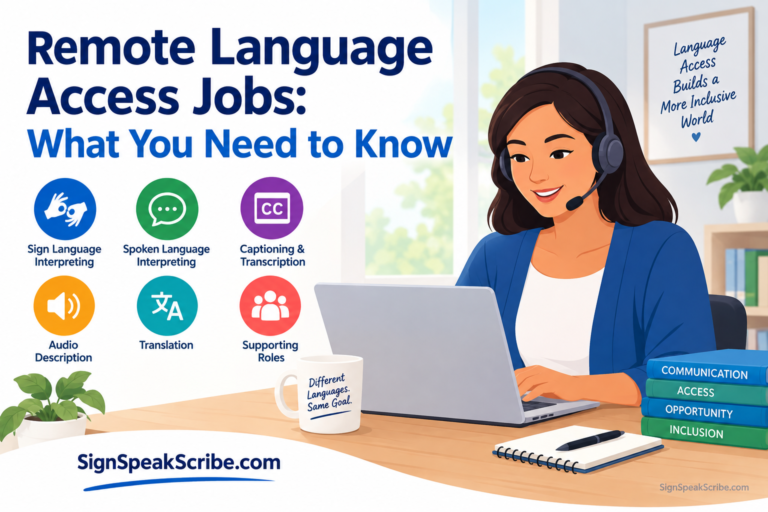
SignSpeakScribe.com is a niche job board dedicated exclusively to language access careers, including sign language interpreting, spoken language interpreting, captioning and transcription, translation, audio description, and supporting roles.
Employers and agencies: Post or link your open interpreter positions and connect with professionals looking for new opportunities.
Sign language interpreters: Explore job opportunities, discover agencies, and take the next step in your professional journey.
Visit SignSpeakScribe.com and help build the future of language access.