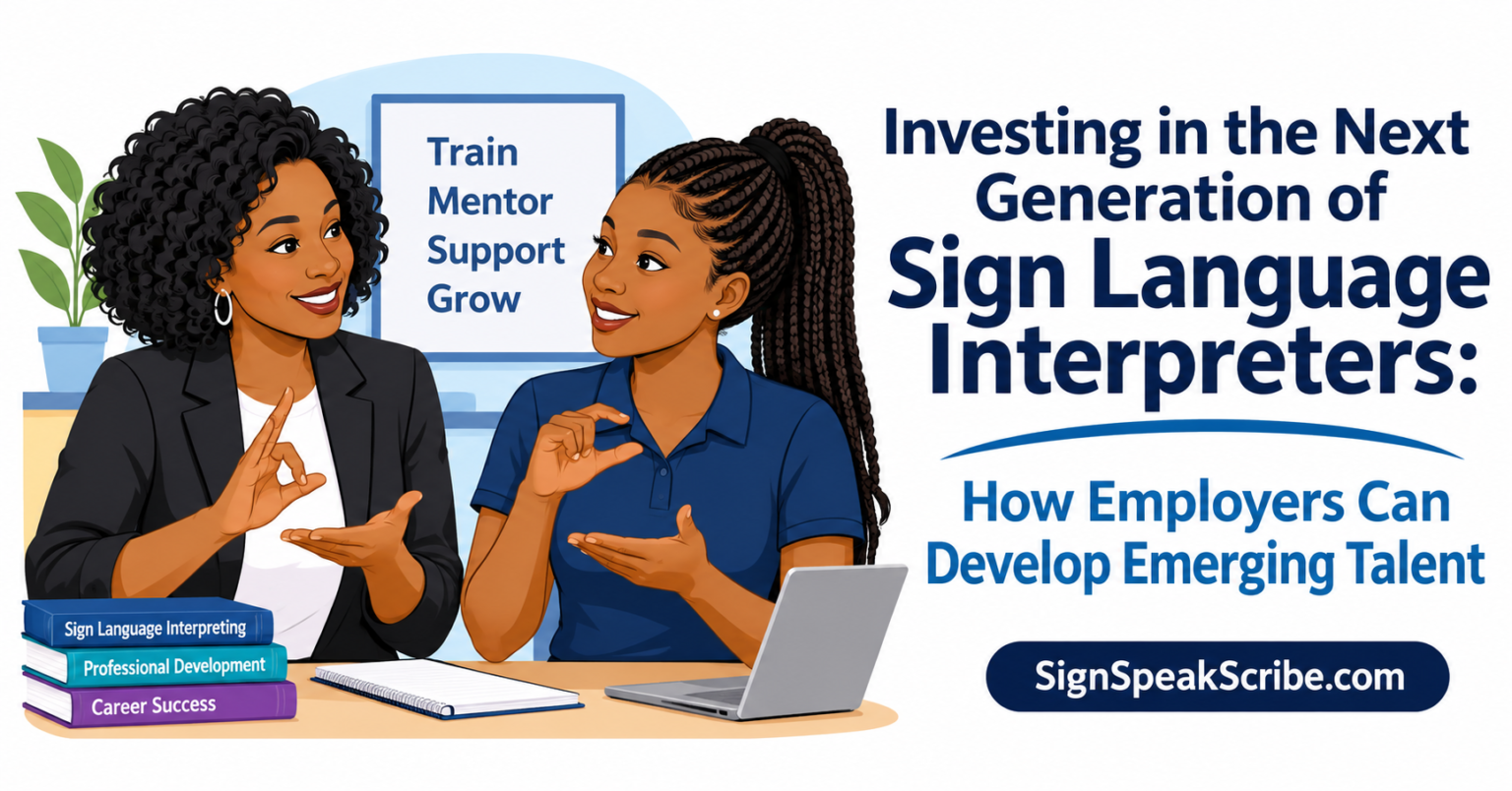
Investing in the Next Generation of Sign Language Interpreters: How Employers Can Develop Emerging Talent
The future of the interpreting profession depends on more than recruiting experienced professionals. It also depends on investing in emerging sign language interpreters who are working toward their qualifications, building their skills, and preparing to enter the workforce.
Across healthcare, education, government, business, and community services, organizations rely on qualified sign language interpreters to ensure effective communication and equal access for Deaf and hard-of-hearing individuals. However, finding qualified interpreters for open positions can be challenging, particularly in areas where the demand for interpreting services exceeds the available workforce.
One way employers can address this challenge is by looking beyond traditional recruitment strategies and developing the next generation of interpreting professionals.
Instead of waiting for fully experienced candidates to become available, employers can create opportunities for emerging talent through mentorship, professional development, financial assistance, and structured career pathways.
Investing in future interpreters isn’t simply about filling today’s vacancies. It’s about building a stronger, more sustainable interpreting workforce for tomorrow.
1. Look Beyond Certification When Identifying Emerging Talent
Certification and professional qualifications are important considerations when hiring sign language interpreters. Employers need professionals who meet the qualifications and requirements appropriate for their assignments and work environments.
However, employers should also recognize that talented individuals may be at different stages of their professional development.
Some emerging interpreters are recent graduates of interpreter education programs. Others may have completed their educational training but are still working toward certification. Some may have experience in community settings, educational environments, or other opportunities that have helped them develop their interpreting skills.
These individuals represent potential future additions to the interpreting workforce.
Employers can expand their recruitment pipelines by connecting with:
- Students enrolled in sign language interpreting programs.
- Recent graduates of interpreter education programs.
- Interpreters preparing for certification examinations.
- Emerging professionals seeking supervised experience.
- Individuals pursuing additional professional development.
Rather than automatically overlooking candidates who are still developing their qualifications, employers can consider whether they have appropriate opportunities for these individuals to gain experience and advance their careers.
Of course, emerging interpreters should only be assigned work that matches their current qualifications, demonstrated competencies, and applicable professional and legal requirements. Certain assignments require specific credentials, and employers must respect those standards.
The goal is not to lower professional expectations. It is to create more opportunities for qualified individuals to reach them.
2. Create Mentorship and Professional Development Opportunities
One of the most valuable investments an employer can make is establishing a mentorship program for emerging sign language interpreters.
Learning to interpret requires more than completing an educational program. Developing professional judgment, managing challenging assignments, understanding different interpreting environments, and maintaining ethical standards takes continued learning and practical experience.
Experienced interpreters can play an important role in helping emerging professionals navigate these challenges.
Employers can establish mentorship opportunities that include:
- Pairing emerging interpreters with experienced mentors.
- Providing opportunities to observe qualified professionals when appropriate.
- Organizing workshops and professional development sessions.
- Encouraging participation in interpreting conferences and industry events.
- Offering constructive feedback and opportunities for skill development.
- Helping emerging interpreters understand professional expectations and ethical responsibilities.
Mentorship can also help new professionals develop confidence as they transition from an educational environment into the workplace.
Employers should consider providing compensation or other meaningful recognition for experienced interpreters who dedicate their time to mentoring. Mentorship requires time, preparation, and professional commitment.
A well-structured program benefits both sides. Emerging interpreters receive guidance, while experienced professionals have an opportunity to contribute to the future of their profession.
3. Invest Financially in the Next Generation of Interpreters
Professional development can become expensive, particularly for individuals entering the interpreting field.
Between educational expenses, professional memberships, certification examinations, workshops, and continuing education, emerging interpreters may face financial barriers that slow their career progression.
Employers can help reduce these barriers by offering financial assistance and professional development benefits.
Here are several practical ways organizations can invest in emerging talent.
Support professional association memberships
Employers can consider covering membership fees for organizations such as the Registry of Interpreters for the Deaf (RID). Membership can help emerging professionals connect with the interpreting community, access professional resources, and learn about industry developments.
Help cover certification examination expenses
For individuals who meet the applicable eligibility requirements, employers can offer financial assistance toward certification examination fees.
This may help reduce the financial burden of pursuing professional credentials and encourage continued progress toward certification.
Provide professional development funding
Employers can establish annual budgets for workshops, conferences, continuing education, and specialized training.
These opportunities help emerging interpreters strengthen their knowledge and remain engaged in professional growth.
Offer scholarships or educational assistance
Organizations can partner with interpreter education programs to provide scholarships, tuition assistance, or other educational support.
These investments can help students complete their training and prepare for future employment opportunities.
Consider paid internship or entry-level development programs
Where appropriate, employers can create paid opportunities that allow individuals to develop workplace skills under proper supervision and within clearly defined responsibilities.
Financial assistance should be connected to transparent eligibility requirements and professional development goals. Employers should also ensure that any work performed is appropriately compensated.
The important point is that employers don’t always need to make enormous financial commitments. Even modest investments can make a meaningful difference in someone’s professional journey.
4. Build Relationships With Interpreter Education Programs
Employers don’t have to wait until graduates enter the job market to begin recruiting future interpreters.
Building relationships with colleges, universities, and interpreter education programs can help organizations connect with emerging talent earlier.
These partnerships can create opportunities for employers to introduce their organizations, explain their services, and discuss potential career paths within the interpreting industry.
Some ways to develop these relationships include:
- Participating in college career fairs and recruitment events.
- Offering guest presentations about interpreting careers.
- Connecting students with experienced working interpreters.
- Providing information about employment opportunities and workplace expectations.
- Developing appropriate internship or observation opportunities.
- Sharing information about entry-level positions and career development programs.
These relationships also give employers an opportunity to better understand what students are learning and what challenges they face when transitioning into professional interpreting.
For students, early exposure to potential employers can make the transition from education to employment less intimidating.
For employers, these partnerships can create a long-term recruitment pipeline rather than relying entirely on candidates who are already established in the profession.
5. Create a Workplace That Encourages Long-Term Career Growth
Recruiting emerging interpreters is only part of the equation. Employers must also create an environment where professionals want to stay and continue developing their careers.
Retention is an important part of workforce development.
Emerging interpreters who feel supported, respected, and encouraged are more likely to see opportunities for long-term professional growth within an organization.
Employers should consider:
- Providing competitive and transparent compensation.
- Offering access to continuing education.
- Establishing clear expectations for professional advancement.
- Encouraging feedback and open communication.
- Recognizing professional achievements and milestones.
- Supporting appropriate work-life balance.
- Creating opportunities to develop specialized interpreting skills.
Organizations should also recognize that professional growth doesn’t happen overnight. Emerging interpreters need time to develop experience, strengthen their skills, and determine which areas of the profession best match their interests and abilities.
A supportive workplace can help turn an entry-level opportunity into a long-term professional relationship.
When employers invest in their people, they are also investing in the quality and sustainability of their interpreting services.
Key Takeaways: Investing in Future Sign Language Interpreters
Developing emerging sign language interpreters requires a commitment to education, mentorship, professional development, and long-term workforce planning.
Here are five important takeaways for employers:
- Expand recruitment strategies: Connect with interpreting students, recent graduates, and professionals working toward certification.
- Establish mentorship opportunities: Help emerging interpreters learn from experienced professionals.
- Provide financial assistance: Consider supporting professional memberships, certification examinations, workshops, and continuing education.
- Partner with educational institutions: Build relationships with interpreter education programs to connect with future professionals.
- Focus on retention: Create a workplace that encourages professional growth, recognizes achievements, and supports career advancement.
Employers who invest in developing talent today can help strengthen the interpreting workforce for years to come.
Frequently Asked Questions (FAQ)
1. Can employers hire sign language interpreters who are not yet certified?
Employment requirements depend on the position, assignment, applicable laws, regulations, and organizational policies. Some opportunities may be appropriate for individuals who are still developing their qualifications, while other assignments require specific credentials. Employers should carefully evaluate qualifications and ensure that assignments are appropriate for each individual’s demonstrated competencies.
2. How can employers support emerging sign language interpreters?
Employers can offer mentorship, professional development, financial assistance for eligible membership and examination expenses, educational partnerships, and appropriate entry-level opportunities.
3. Should employers pay for RID membership or certification examinations?
Employers can consider covering professional association membership fees and eligible certification examination expenses as part of a professional development or workforce investment program. These benefits can help reduce financial barriers and encourage continued professional growth.
4. Why is mentorship important for new sign language interpreters?
Mentorship provides guidance, constructive feedback, professional insight, and opportunities to learn from experienced interpreters. It can help emerging professionals better understand workplace expectations and develop their professional skills.
5. How can employers find emerging sign language interpreters?
Employers can connect with interpreter education programs, colleges, universities, professional associations, industry networking events, and specialized language access job boards such as SignSpeakScribe.com.
Conclusion: The Future of Interpreting Starts With Today’s Investment
The future of the sign language interpreting profession depends on more than the experienced interpreters currently working in the field. It also depends on the students, graduates, and emerging professionals who are preparing to take the next step in their careers.
Employers have an opportunity to make a meaningful difference by investing in these individuals through mentorship, financial assistance, professional development, and appropriate employment opportunities.
The interpreting workforce cannot grow if organizations focus exclusively on recruiting professionals who are already established. Developing future talent must become part of the industry’s long-term workforce strategy.
Today’s emerging interpreter could become tomorrow’s experienced professional, mentor, or industry leader.
The question for employers is simple: Are you only looking for experienced interpreters, or are you also investing in the people who will become the future of this profession?
Call to Action: Connect With Emerging Language Access Talent
Are you an employer, interpreting agency, or organization looking to connect with sign language interpreters and other language access professionals?
Visit SignSpeakScribe.com, the job board dedicated exclusively to language access careers.
Post your employment opportunities, connect with professionals, and help build a stronger future for the language access industry.
Invest in talent. Create opportunities. Strengthen the future of interpreting.
Visit https://SignSpeakScribe.com to get started.